
How Much Does Online Store Maintenance Cost Annually - A Realistic Breakdown for Serbia
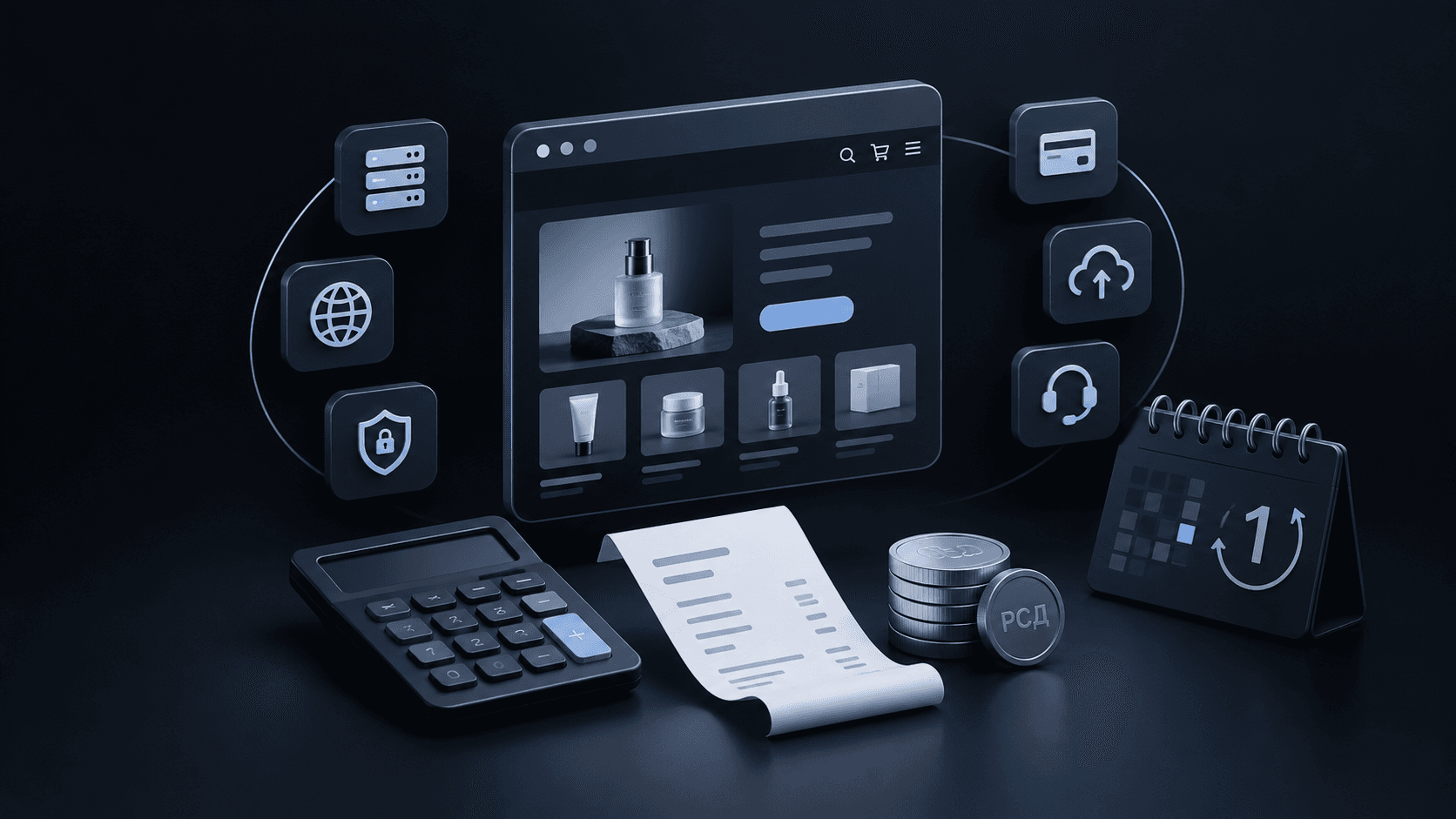
When business owners budget for an online store, they almost always calculate only the cost of building it. "How much does development cost" has a clear answer before launch. "How much will this cost me next year, and the year after that" stays unanswered — until the first unexpected bill arrives.
Maintenance isn't an optional extra. A store that runs without updates, monitoring, and occasional improvements gets slower, more vulnerable, and harder to operate month after month. In this article, we break down what maintenance actually covers and what it realistically costs per year in Serbia, depending on whether you run your store on a ready-made platform or a custom solution.
What "maintenance" actually includes for an online store
The term often gets reduced to "the site works or it doesn't," but maintenance covers several distinct cost categories:
- Hosting and infrastructure — server, CDN, database, backup systems
- Security updates — vulnerability patches, SSL certificates, attack protection
- Platform and dependency updates — whether it's a SaaS subscription or custom code relying on libraries that age
- Support and small changes — price changes, adding products, text edits, bug fixes
- Performance monitoring — load speed, uptime, error tracking
- Legal compliance — fiscalization, e-invoicing, GDPR/data protection, changes the law introduces during the year
Every one of these items carries its own cost, whether it shows up on an invoice or hides inside a monthly subscription.
A realistic annual breakdown for Serbia
The numbers depend on the size of the store, but here are the ranges we see most often in practice.
Off-the-shelf platform (Shopify, WooCommerce, and similar)
- Monthly platform subscription: €300–1,200 per year
- Paid add-ons (apps/plugins): €200–800 per year
- Hosting (for WooCommerce, outside Shopify): €100–400 per year
- Freelance developer for changes: €300–1,000 per year
- Total: €900–3,400 per year
With off-the-shelf platforms, the biggest hidden cost is add-ons. Every extra feature — faster checkout, advanced search, reporting, accounting integration — typically means another monthly plugin, and those costs quietly stack up.
Custom solution
- Hosting and infrastructure: €100–300 per year
- Security updates and patches: included in a maintenance contract, or €200–600 per year
- Support and small changes: €300–900 per year
- Total: €600–1,800 per year
With a custom solution, there's no monthly subscription for the platform itself — you only pay for infrastructure and work actually performed. For a store that doesn't need constant changes, this often means several months at a time with no cost beyond hosting.
Note: these are rough ranges for a small to mid-sized store. For a more detailed estimate based on your catalog size and transaction volume, reach out to us.
Why the costs differ so much between approaches
The difference isn't just subscription price — it comes down to who absorbs the cost of growth.
With a SaaS platform, every new requirement (a new integration, a bigger catalog, more traffic) typically means moving to a more expensive plan or adding another plugin. Cost scales linearly with the store's success, which is a bit paradoxical — the better you do, the more you pay a platform that did nothing extra to earn it.
With a custom solution, infrastructure scales with actual resource usage, and features are paid for once when built, not billed again every month. We cover this in more detail in our article on one-time investment vs. monthly subscription.
What gets underestimated most often
- Owner's time. Small edits you "quickly do yourself" on a SaaS platform eat hours every month — time that has a real cost even when it never shows up on an invoice.
- Security patches. A neglected WordPress/WooCommerce install with outdated plugins is one of the most common attack targets in the region — cleaning up after a breach costs far more than regular maintenance ever would.
- Legal changes. Fiscalization, e-invoicing, and data protection rules change during the year, and the store has to keep up regardless of platform.
- Performance under load. A store that runs smoothly with 50 visits a day can start slowing down or crashing at 500 — and that's rarely tested in advance.
How to budget for maintenance
Instead of treating maintenance as an unpredictable cost, we recommend budgeting for it as a fixed line item from day one:
- Define upfront what's included in monthly/annual support, and what's billed separately (new features outside the base scope)
- Ask for a fixed price on predictable items — hosting, security updates, regular performance reviews
- Keep a 10–15% budget reserve for unplanned changes (legal requirements, urgent fixes)
- Confirm upfront who owns the code and the data — if you switch providers, the transition shouldn't mean rebuilding from scratch
That last point is why building without vendor lock-in isn't just a technical preference — it's a direct saving, because maintenance doesn't have to stay tied to the same provider or platform forever.
Conclusion
Online store maintenance in Serbia realistically costs between €600 and €3,400 per year, depending on the approach and scope. Off-the-shelf platforms hide that cost across a series of smaller subscriptions that grow with the store's success; custom solutions make it predictable and tied to work actually performed.
If you're planning a build, or already run a store and want a realistic maintenance estimate for your case, schedule a free call — we go through your catalog and traffic and give you a concrete calculation, not generic numbers.
Ready for the next step?
Let's talk about your project.
Schedule a short call and let's discuss how we can help your business grow.